

vulnerability
Blog post
Your AI agent fixed the bug, but what else did it change?
Source: Trail of Bits Blog · Published · Last checked 1 hour ago · 3 min read
Publisher excerpt From Trail of Bits Blog
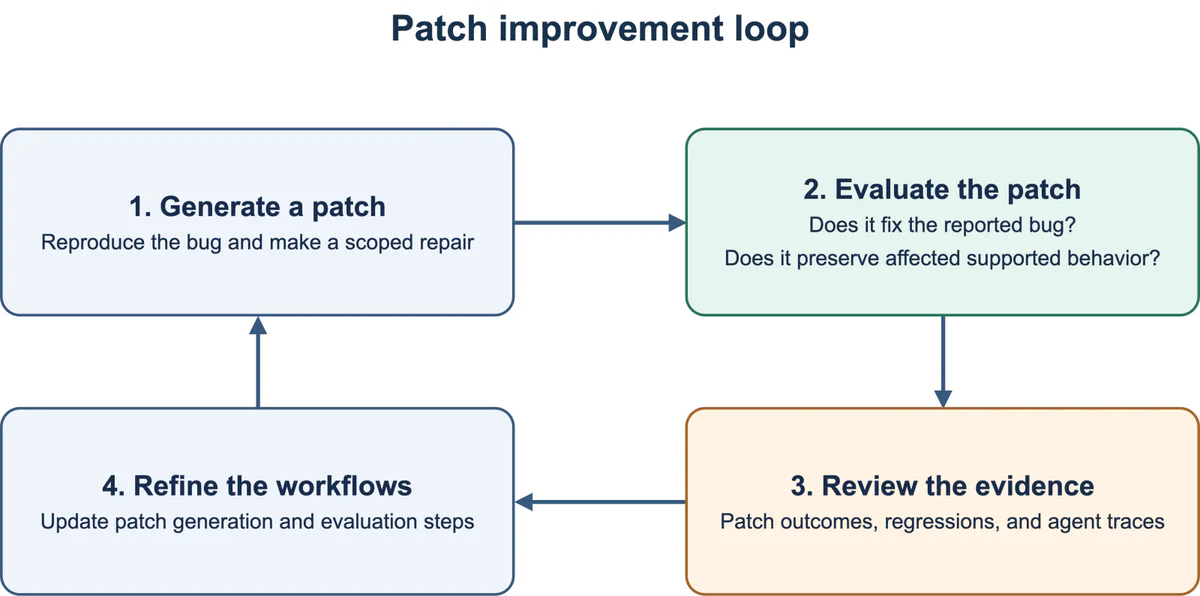
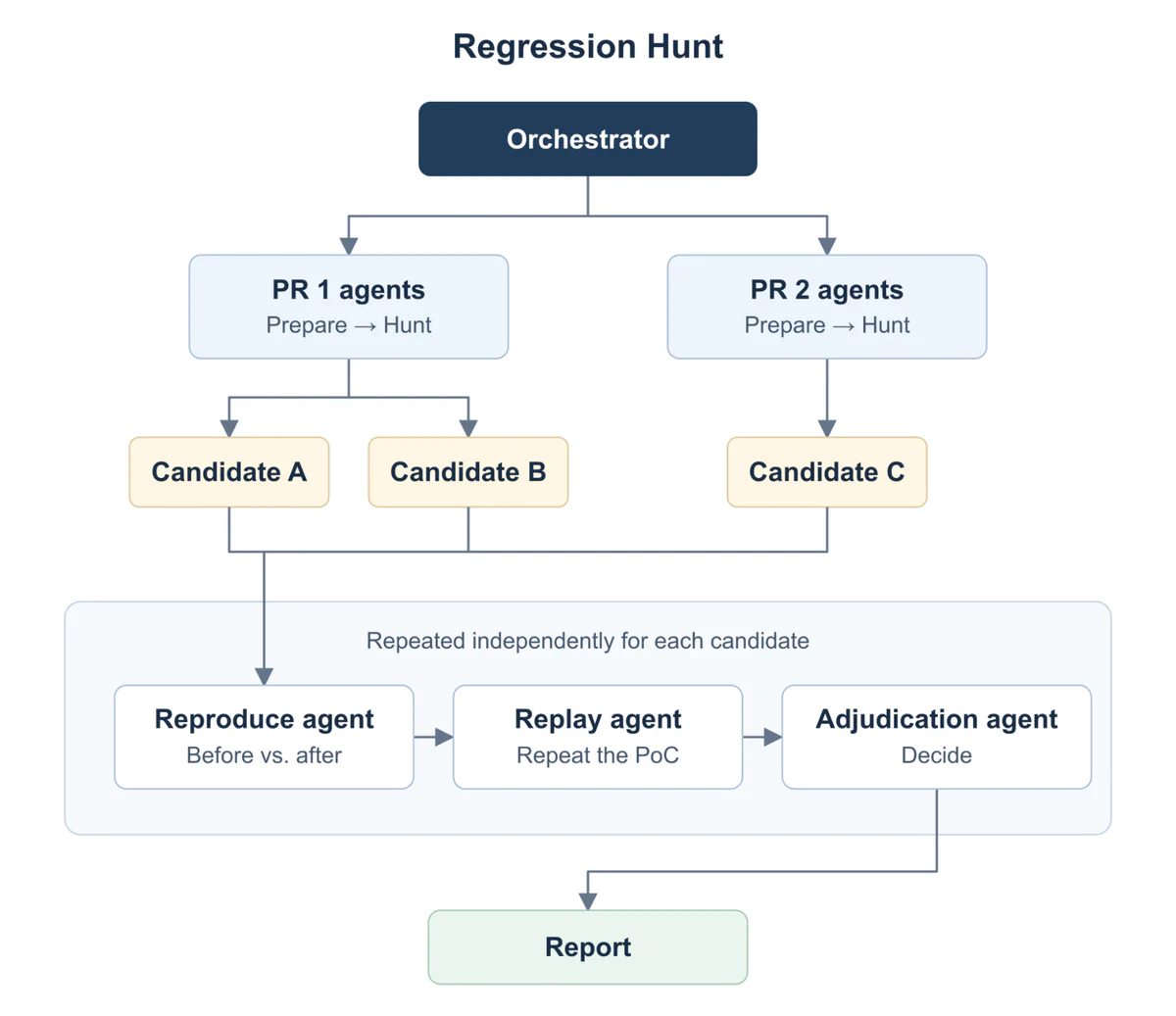
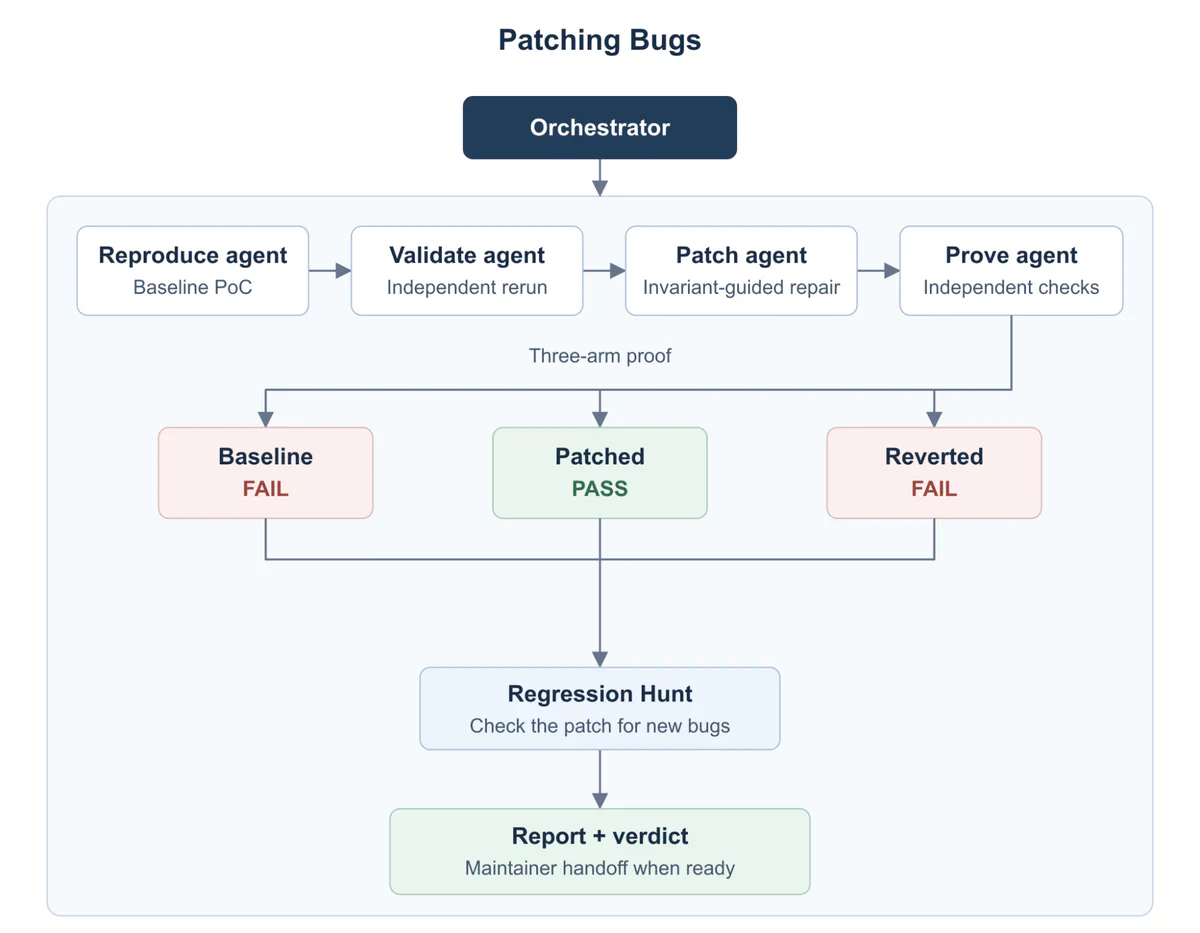
Today we’re publishing patching-bugs and regression-hunt, two plugins that let engineers delegate patch development and regression checks to agents. Our patching-bugs plugin reproduces reported bugs, develops fixes, and tests them. The regression-hunt plugin checks whether any changes break previously working and supported behavior. Engineers can direct the work and review their results; maintainers can supply their own security assumptions and patching requirements, so the agents work within the project’s rules. We built patching-bugs and regression-hunt through Patch the Planet, our joint initiative with OpenAI, where we’ve co-authored hundreds of security patches for widely used open-source projects. Motivated by our major successes on projects like Scapy, our plugins draw on our analysis of merged patches and thousands of our engineers’ Codex sessions. The plugins provide maintainers with a structured workflow, evidence, independent checks, and best practices to improve their patching hygiene. In our preliminary evaluations, regression-hunt produces 25% fewer false-positive findings than a baseline Codex agent prompted to “review the PR for regressions.” Standardizing the patching process Our September post reported regressions introduced by some of our Patch the Planet patches. Since then, we’ve reviewed every patch that a Trail of Bits engineer authored and maintainers merged upstream. The review confirmed 21 regressions from over 130 PRs merged: 16 functional, one performance, and four build/test. None broke a security protection. (“Regression” refers to a new defect introduced by a change that breaks previously correct and supported behavior along a path a real user or attacker can reach.) For each patch, an agent looked for potential regressions, confirmed each one with a proof-of-concept (PoC) run before and after the change, and then passed the results to an engineer for review. The review was noisy: today’s bug disclosures arrive at an unprecedented speed and scale, and for patching to keep pace, the industry needs to increase its signal-to-noise ratio. The 21 confirmed regressions were identified among 58 candidates in a single run (~36% precision). But because agents take many different approaches and reach different results, each run generates more candidates to manually sort through. That led us to two conclusions: To introduce fewer regressions, we needed a standard way to write patches, with the same checks applied every time. To catch the regressions we still introduce, we needed a standard way to check for them, with written rules for what counts as a regression. Standardizing both steps also makes every run repeatable and comparable. No fixed checklist will catch every regression, so we collect agent trajectories from our engineers’ patching sessions, and use the tasks that an earlier version failed to benchmark for the next one (figure 1). Figure 1: Feedback loop for generating and evaluating patches. How we de…
Excerpt only, shown with attribution. This content belongs to the original publisher and has not been independently verified by CyberSecurity.pk.
More images
Keywords: vulnerabilityrceaptvulnerability newsTrail of Bits Blogcybersecurity newssecurity news Pakistan
Reference: Trail of Bits Blog — blog.trailofbits.com ↗