

cloud
Blog post
SAML: A fractal of bad design
Source: Trail of Bits Blog · Published · Last checked 2 hours ago · 3 min read
Publisher excerpt From Trail of Bits Blog
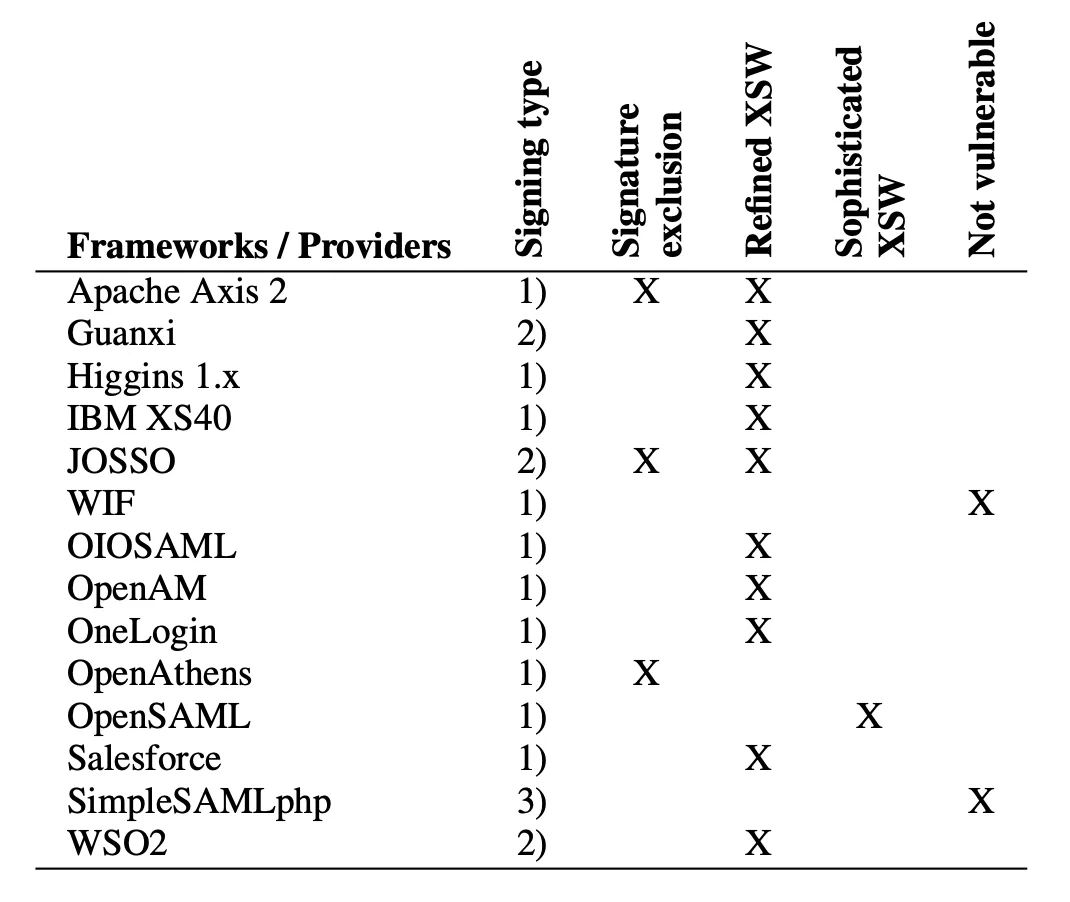
Born out of academia and raised in corporate IT departments, the Security Assertion Markup Language (SAML) authentication protocol continues to be a staple in these organizations. However, it’s time for it to retire. With the rise of software-as-a-service (SaaS) companies in the late aughts, IT departments needed a way for users to authenticate to many new web services. SAML and the burgeoning single sign-on (SSO) industry fulfilled this need. However, SAML is being crushed under the weight of its own complexity. It’s time to deprecate it and move on to modern alternatives like OpenID Connect (OIDC). In this post, I will explore the design-by-committee origin of SAML, its progression through the ranks in academic and corporate environments, its slow disintegration at the hands of the security research community, and its (hopeful) deprecation in favor of newer protocols. SAML 101 What’s insidious about SAML is that it really is mostly straightforward to understand, but it’s built on a foundation of sand, bone dust, and ash; it works … if you assume XML signature validation is reliable. But XML signature validation is deeply cursed, and is so complicated that most fielded SAML implementations are wrapping libxmlsec, a gnarly C codebase nobody reads. — Thomas Ptacek, 2023 SAML and the birth of the SSO industry Wikipedia tells me that “SAML is an XML-based markup language for security assertions.” It was created in 2002 by the Organization for the Advancement of Structured Information Standards (OASIS) Security Services Technical Committee (SSTC). Okay, we’re not off to a great start by modern standards. XML, despite having some redeeming qualities, is quite complex compared to newer alternatives like JSON, but we’ll get more into that later. Further, a committee of subcommittees having meetings is a recipe for “kitchen-sink” protocol design (e.g., waterfall methodology, big design up front, etc.). And sure enough, we’ve now jammed four (!) XML-based security protocols into one: … the following intellectual property was contributed to the SSTC: Security Services Markup Language (S2ML) from Netegrity AuthXML from Securant XML Trust Assertion Service Specification (X-TASS) from VeriSign Information Technology Markup Language (ITML) from Jamcracker — SAML: History However, the desire for such a protocol was undeniable. As the internet shifted from Web 1.0 in the 90s to Web 2.0 in the early aughts, users and organizations needed an easy way to authenticate to many new web services. Academia was the biggest driver of this movement, although not the only one: Central Authentication Service (CAS) in 2002 at Yale, Shibboleth IdP in 2003 by Internet2, a consortium of research universities (including my alma mater), ADFS in 2003 by Microsoft, and simpleSAMLphp around 2007 by Uninett, a state-owned Norwegian company with close ties to academia. All these authentication projects eventually supported SAML in one way or another. Like ARPANET before it…
Excerpt only, shown with attribution. This content belongs to the original publisher and has not been independently verified by CyberSecurity.pk.
More images
Reference: Trail of Bits Blog — blog.trailofbits.com ↗